The Market Is Changing. Are You Just Watching, or Are You Shaping It?
In the rapidly evolving landscape of the digital economy, success is no longer about simply reacting to market shifts; it’s about proactively understanding and shaping them.
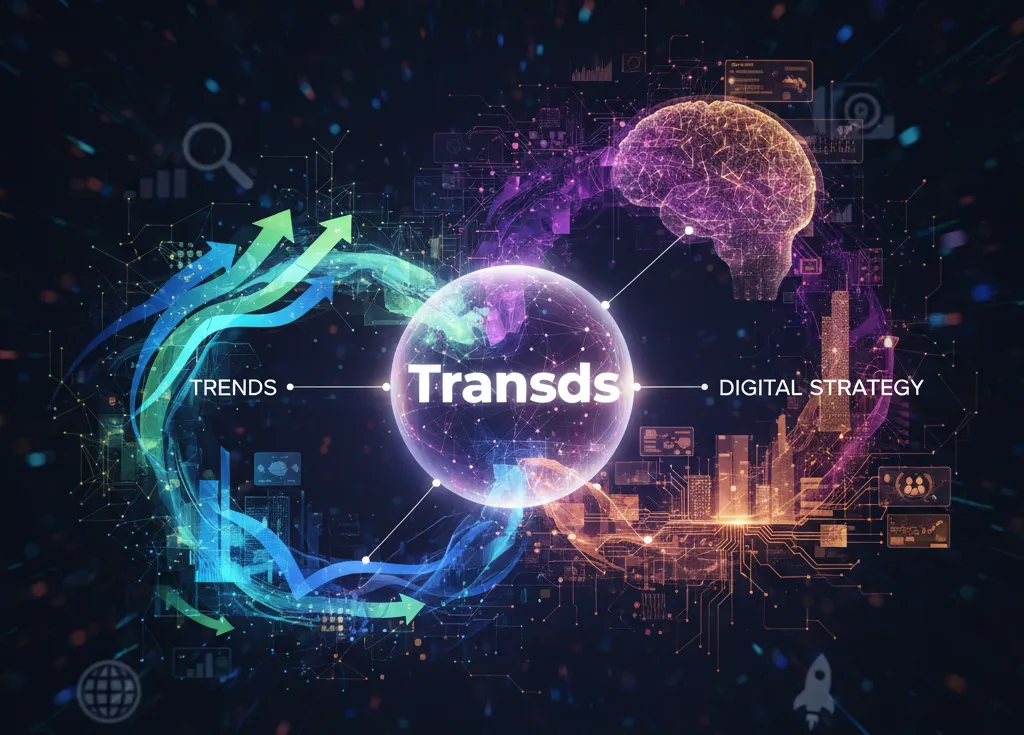
The term “Transds,” while unique, aptly captures the critical intersection of three powerful forces: Trends that dictate market direction, Data Science that provides the predictive power, and Digital Strategy that translates insight into action. This article delves into how modern enterprises must master this nexus to achieve sustainable growth, outpace competition, and build true market resilience.
We are moving beyond basic data analytics into an era where deep, often hidden, signals are the true currency. The ability to decode these emergent patterns—the true “Transds“—is what separates market leaders from laggards. This isn’t merely an exercise in technology adoption; it’s a fundamental shift in business philosophy and execution.
The Pillars of the Transds Framework
To effectively harness the power of emergent market dynamics, businesses must focus on three core, interconnected pillars. Ignoring any one of them means you’re operating with only a fraction of the necessary intelligence.
Pillar 1: Predictive Trend Identification (The “What’s Next”)
The first step is identifying signals of change before they become established trends. This requires moving away from traditional historical analysis and embracing forward-looking, real-time data sources.
Key Strategies:
- Weak Signal Detection: You must monitor peripheral data—social chatter, obscure academic research, niche startup funding, and geopolitical shifts—for early indicators of consumer behavior changes or technological breakthroughs. These faint whispers often become the market’s roar.
- Behavioral Economics Integration: Understanding why consumers are changing their habits, not just that they are. Incorporating psychological and sociological models into data analysis provides the context and depth needed to predict long-term viability.
- Scenario Planning: Develop multiple future narratives based on identified weak signals. This allows an organization to pre-plan strategic responses, minimizing shock and maximizing agility when a trend solidifies. For example, a retail company might model scenarios for sustained high inflation, a sudden pivot to hybrid shopping, or the emergence of decentralized commerce.
Pillar 2: The Data Science Engine (The “Why & How Much”)
The sheer volume of data is meaningless without the right computational tools and expertise. Data Science acts as the engine, transforming raw, chaotic information into precise, actionable insights.
Advanced Techniques Driving Insight:
- Granular Segmentation: Move beyond demographic segmentation to behavioral micro-segmentation using advanced clustering algorithms (e.g., k-means, DBSCAN). This reveals distinct, small groups with highly specific needs, leading directly to hyper-personalized strategies and higher conversion rates.
- Natural Language Processing (NLP) for Intent Mining: Utilize large language models (LLMs) and advanced NLP to analyze unstructured data—customer reviews, service call transcripts, social media comments—to extract underlying sentiment, pain points, and product feature requests with unprecedented accuracy. This is crucial for understanding the emotional drivers behind the Transds.
- Causal Inference: Employ techniques beyond simple correlation, such as Difference-in-Differences or Uplift Modeling, to determine the true causal impact of specific interventions. You need to know: “Did the new ad campaign cause the sales increase, or was it a coinciding factor?” This ensures that resources are allocated based on proven efficacy, not statistical coincidence.
Pillar 3: Dynamic Digital Strategy Execution (The “Action”)
The final, and arguably most challenging, pillar is translating high-fidelity data insight into a flexible, executable digital strategy. A strategy rooted in Transds must be designed for continuous iteration.
Principles of Dynamic Strategy:
- The Continuous Feedback Loop: Establish tight integration between the data science team, the strategy team, and the execution teams (marketing, product development, operations). Insights must flow bi-directionally, allowing for rapid A/B testing, hypothesis refinement, and strategic course correction.
- API-Driven Agility: Structure your technological stack around flexible Application Programming Interfaces (APIs). This allows different systems to communicate seamlessly, speeding up the deployment of new digital capabilities required by emergent trends, such as launching a new digital storefront or integrating a critical third-party service.
- Strategic De-risking: Acknowledge that not all trends will materialize. A robust digital strategy includes mechanisms to strategically de-risk exploratory projects. Utilizing Minimum Viable Products (MVPs) and “fail fast” methodologies limits capital expenditure on uncertain bets while still allowing the organization to test the waters of a new Transds.
Organizational Imperatives for Mastering Transds
Successfully navigating the nexus of trends, data, and strategy requires more than just technology; it demands a cultural and organizational overhaul.
1. Data Literacy as a Core Competency
The entire organization, from the executive suite to frontline staff, must speak a common language of data. Training should move beyond basic tool proficiency to focus on critical data interpretation and understanding statistical relevance. When leaders understand the data science engine, they can ask better strategic questions and avoid decisions based on spurious correlations.
2. The Rise of the T-Shaped Strategist
The modern strategist must be T-shaped: possessing deep expertise in one functional area (the vertical bar of the “T”) and a broad, cross-functional understanding of data science, technology, and business operations (the horizontal bar). These individuals are the essential translators who bridge the gap between technical data scientists and non-technical business leaders.
3. Ethical and Responsible Trend Analysis
Adherence to data privacy regulations (like GDPR and CCPA) and an ethical framework for data utilization are non-negotiable. Exploiting market Transds must be balanced with user trust. Your strategy must be transparent about data collection practices and prioritize the long-term relationship with the customer over short-term analytical gain. This is a critical factor in maintaining trust and credibility in the digital age.
Kaggle is widely regarded as the largest and most influential platform for data science and machine learning professionals. It hosts competitions, provides datasets, and features learning materials. Linking to it provides maximum topical relevance and authority for content discussing trends and data strategy.
Conclusion: The Strategic Future is in the Transds
The pursuit of understanding Transds isn’t a periodic project; it’s the continuous operational mode of the modern intelligent enterprise. By building robust capabilities in predictive trend identification, leveraging sophisticated data science, and implementing a dynamic digital strategy, businesses can transform from reactive players to market shapers.
The future belongs to the organizations that can consistently and quickly decode the weak signals, accurately model their impact, and execute agile strategies that capitalize on change. Mastering this trifecta isn’t just about survival—it’s about achieving dominant, purposeful growth in an increasingly complex and competitive digital world.