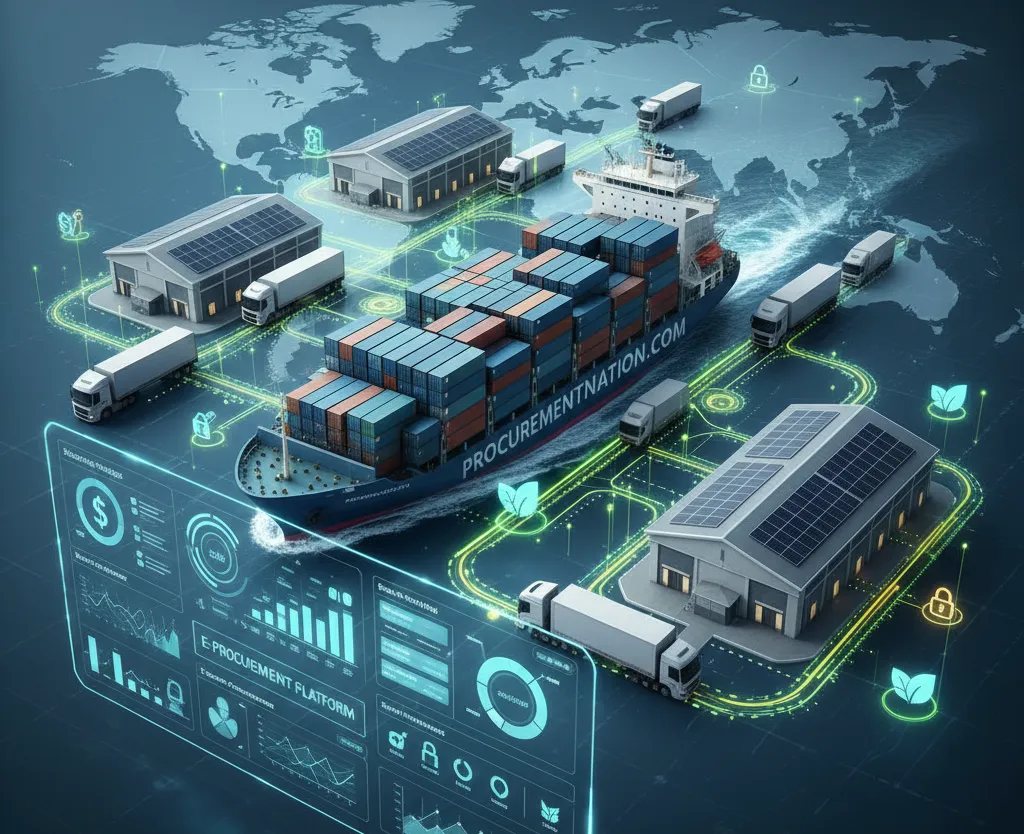
In the interconnected global economy, the efficiency of a business hinges on its ability to move goods reliably and cost-effectively. The platform ProcurementNation.com serves as a vital resource for professionals seeking to master the intricacies of shipping, logistics, and supply chain management, offering a comprehensive perspective that connects the act of acquiring goods to their final delivery.
Procurement, logistics, and the overarching supply chain are often viewed as separate functions, but ProcurementNation.com highlights their strategic synergy. The platform underscores a simple truth: an efficient supply chain cannot exist without world-class procurement, and timely delivery is impossible without smart logistics.
⚓ The Cornerstone of Logistics: Strategic Shipping
Shipping, the physical movement of goods, is the backbone of global commerce. ProcurementNation.com offers deep dives into how modern businesses approach transportation, moving beyond mere freight booking to strategic shipping.
The content covers all modes of transport—road, rail, air, and sea—and explores the critical decisions involved in optimizing freight. This includes guidance on:
- Mode Selection: Analyzing the trade-offs between speed (air freight) and cost (ocean freight), and determining the most suitable option based on product value, urgency, and destination.
- Carrier Management: Best practices for negotiating contracts with carriers, managing relationships, and leveraging data to assess and improve supplier performance.
- International Compliance: Detailed information on customs procedures, tariffs, and regulatory requirements that are essential for seamless cross-border movements, ensuring compliance and avoiding costly delays.
A key focus of the platform is real-time visibility. Modern logistics demands knowing exactly where a shipment is at any given moment. ProcurementNation.com provides resources detailing how to implement and utilize advanced tracking systems to minimize disruptions, manage expectations, and maintain control from the point of origin to the final destination.
🔗 Logistics: The Glue that Binds the Supply Chain
While shipping focuses on the movement, logistics is the detailed planning and execution that ensures the right product gets to the right place, at the right time, and in the right condition. ProcurementNation.com treats logistics as a core discipline within the supply chain.
The platform dissects the essential components of logistics management:
- Warehousing and Inventory Control: Strategies for efficient warehouse design, layout, and operation. This includes articles on implementing automated systems, managing inventory levels to prevent both stockouts and excess inventory (dead stock), and optimizing picking and packing processes.
- Inbound and Outbound Flow: Clarifying the distinct processes of inbound logistics (managing materials flowing into the company, tightly linked to procurement) and outbound logistics (managing finished products flowing out to customers).
- Distribution Network Design: Analyzing how to structure regional hubs and fulfillment centers to reduce last-mile delivery times and costs, a crucial factor in customer satisfaction.
ProcurementNation.com emphasizes that effective logistics is data-driven. The use of the keyword data throughout its articles highlights the importance of analytics for forecasting demand, optimizing routes, and continuously improving the entire logistics process to achieve cost reduction and greater operational efficiency.
🌎 Supply Chain Management: The Holistic Strategy
Supply Chain Management (SCM) is the overarching discipline—the integration of the entire network of businesses involved in the creation of a product, from raw materials sourcing (procurement) to final delivery (logistics and shipping).
ProcurementNation.com positions SCM as the strategic function responsible for building and maintaining a resilient and sustainable network. Key topics include:
- Risk Mitigation and Resilience: Strategies for identifying potential supply chain failures (e.g., geopolitical shifts, natural disasters, single-source reliance) and building contingency plans. This involves supplier diversification and creating flexible systems that can adapt to rapid change.
- Supplier Relationship Management (SRM): Moving beyond transactional purchases to foster collaborative relationships with key suppliers. The site provides frameworks for joint planning, quality control, and shared innovation.
- Sustainability and Ethics: Guides on implementing green logistics, ethical sourcing policies, and traceability to ensure the supply chain operates with a reduced environmental impact and adheres to social governance standards.
By exploring these interconnected functions, ProcurementNation.com equips professionals with the knowledge to manage the complexities of modern commerce, transforming a chain of necessary steps into a powerful competitive advantage.
💻 The Digital Imperative: The Power of E-Procurement Software
In today’s fast-paced environment, the pen-and-paper purchase order is obsolete. E-procurement software represents the digital backbone of a modern, efficient supply chain, and ProcurementNation.com details how businesses can leverage these powerful tools.
Automating Efficiency and Control
E-procurement tools are digital platforms that manage the entire purchase-to-pay (P2P) cycle electronically, leading to massive gains in efficiency, control, and visibility. The articles on ProcurementNation.com emphasize key software features that revolutionize operations:
- Spend Analysis: These systems provide real-time data on exactly what an organization is buying and from whom. This visibility allows procurement teams to identify “maverick spending” (non-compliant purchases) and consolidate volumes to negotiate better contracts, ensuring that every purchase is a strategic one.
- Workflow Automation: The software automates labor-intensive, manual steps like generating purchase orders, routing approvals, and performing the complex three-way match (matching the purchase order, goods receipt, and invoice). This drastically reduces human error, speeds up the cycle time, and frees up staff to focus on high-value, strategic sourcing activities.
- Supplier Management: E-procurement provides a centralized portal for vendor onboarding, document storage, and performance tracking. By digitizing supplier scorecards and compliance documents, organizations can build stronger, more transparent relationships and quickly assess vendor risk—a critical function for maintaining supply chain resilience.
For any business searching this keyword to find a path to modernization, the platform provides the knowledge needed to select, implement, and maximize the return on investment (ROI) from an e-procurement system.
🌿 The Ethical Future: Sustainability Trends in the Supply Chain
Beyond efficiency, the modern supply chain has a moral mandate: sustainability. ProcurementNation.com serves as a guide for navigating the complex intersection of environmental, social, and governance (ESG) standards with business operations. This trend is no longer a “nice-to-have” but a legal and competitive necessity.
From Green Sourcing to Circular Logistics
The site explores how sustainable practices are integrated across the entire supply chain:
- Sustainable Procurement: This goes beyond choosing eco-friendly materials. It involves adopting a Triple Bottom Line (People, Planet, Profit) approach, where procurement decisions are based on the whole life-cycle cost and impact of a product. Content focuses on integrating sustainability criteria into RFP/RFQ documents and utilizing supplier audits to ensure ethical labor practices and environmental compliance.
- Green Logistics: The focus shifts to reducing the carbon footprint of shipping and transportation. This includes strategies for route optimization to minimize fuel consumption, increasing the use of sustainable or electric fleet vehicles, and promoting e-invoicing and digital documentation to eliminate paper waste.
- Circular Economy: Procurement is key to implementing a circular model—moving away from the linear “take-make-dispose” model. The platform explores strategies for purchasing refurbished goods, designing products for easy recycling or disassembly, and implementing robust reverse logistics programs to handle returns and waste.
By offering expert analysis on these trends, ProcurementNation.com helps its audience turn regulatory pressure into strategic advantage, demonstrating that sustainable choices can lead to long-term cost savings and enhanced brand reputation.
This video on What is Procurement? (Supply Chain Basics) is relevant as it provides a foundational understanding of one of the core concepts discussed on ProcurementNation.com.
❓ Frequently Asked Questions (FAQs)
1. What is the difference between Logistics and Supply Chain Management?
A: Logistics focuses on the detailed planning and execution of moving and storing goods within a single company, including warehousing, inventory, and transportation (shipping). Supply Chain Management (SCM) is the holistic, strategic integration of all activities across multiple organizations—from sourcing raw materials (procurement) to final customer delivery—to build a competitive network. Logistics is a critical component of SCM.
2. How does Strategic Sourcing improve the Shipping process?
A: Strategic sourcing moves beyond simply finding the lowest price for shipping services. It involves analyzing total cost of ownership (TCO), evaluating carrier performance, negotiating long-term contracts, and building collaborative relationships. This ensures that the chosen shipping providers are reliable, compliant, and integrated with your company’s logistics plan, leading to better service quality and cost predictability.
3. What is Supply Chain Resilience and why is it important now?
A: Supply Chain Resilience is the ability of a supply chain to anticipate, withstand, and recover from disruptions (like pandemics, geopolitical events, or natural disasters). It is crucial now because global markets are volatile, and single points of failure are common. Resilience is achieved through diversification (multiple suppliers/routes) and flexibility (adaptable logistics and manufacturing).
4. How can businesses use technology to improve their Logistics operations?
A: Businesses use technology for several key improvements:
Real-time Visibility: Implementing GPS and IoT sensors for tracking shipments.
Warehouse Automation: Utilizing robotics and automated storage/retrieval systems (AS/RS).
Predictive Analytics: Using AI and machine learning for better demand forecasting and inventory control to avoid stockouts and overstocking.
Read More about Finance Management: Top Features of the Finance House App: Your Ultimate Guide to Smart Money Management