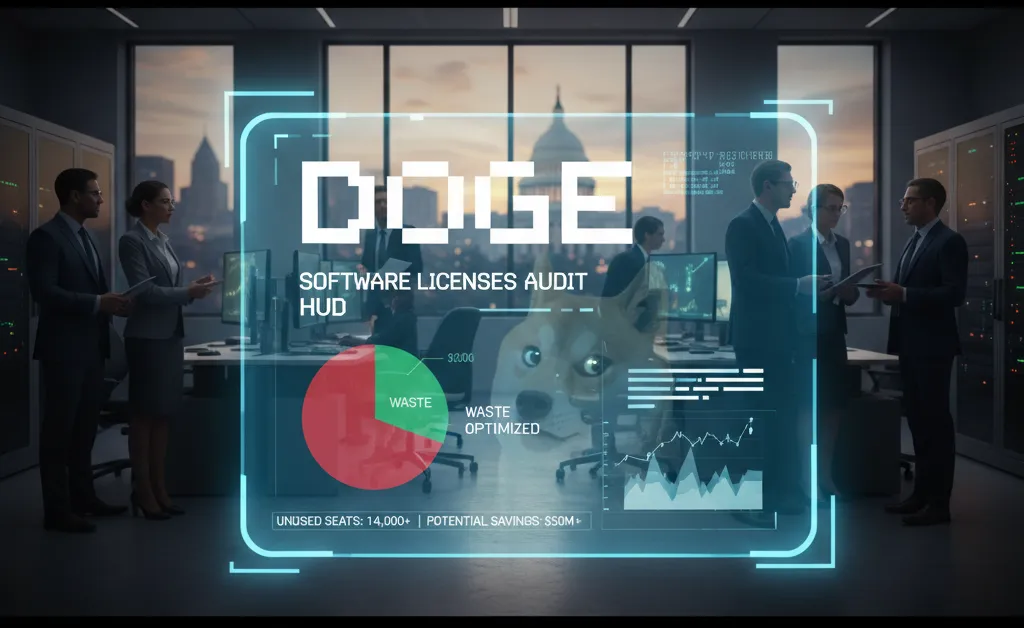
In the modern labyrinth of federal bureaucracy, where digital infrastructure underpins every critical service, software licensing is far from a mere administrative task—it’s a multi-billion dollar strategic asset. Yet, the stark reality of government inefficiency is often illuminated by highly specific, sometimes viral, disclosures. The keyword, a fascinating confluence of internet culture and serious governance, points directly to a high-stakes, high-visibility effort to root out waste: the “DOGE Software Licenses Audit HUD.” This audit, and others like it across federal agencies, is a powerful reminder that the accountability and proper stewardship of taxpayer funds are now inextricably linked to the granular management of digital assets.
The core reader intent here is clear: to understand the context of this specific audit, the systemic issues it exposes, and the expert-level strategies required to address such catastrophic licensing failures within complex federal environments like the Department of Housing and Urban Development (HUD). To an expert eye, this situation is not a novelty; it is a predictable symptom of deep-seated deficiencies in Software Asset Management (SAM) within large, siloed organizations.
The Context: When Satire Meets the Spreadsheet
The reported findings, citing thousands of paid, unused software licenses—from Acrobat to enterprise-level platforms like ServiceNow and Cognos—are more than just a line item error. They represent systemic failures in procurement, deployment, and ongoing asset lifecycle management. For an agency like HUD, which manages critical national priorities like affordable housing, community development, and fair housing enforcement, every wasted dollar is a direct impedance on its mission.
The issue is multifaceted, touching on procurement policies, organizational culture, technical infrastructure, and lack of standardized governance.
1. Decentralized Procurement and the Silo Effect:
In large agencies, various departments or even individual offices often have budget authority to purchase software licenses to meet their immediate operational needs. This leads to what is known as “Shadow IT” or, more formally, decentralized purchasing. Without a central, authoritative Software Asset Management (SAM) program to coordinate, track, and reconcile these purchases, one division may buy 1,000 licenses for a tool that another division already owns and is underutilizing. The result, as highlighted by the DOGE audit, is massive duplication and idle assets.
2. Lack of Automated Discovery and Reconciliation:
The sheer scale of a federal agency’s IT environment—tens of thousands of users, devices, and virtual instances—makes manual license tracking impossible. A foundational failure exposed by the audit is the absence of robust, continuous, and automated discovery tools. It is not enough to simply record a purchase order for a license; an effective SAM system must continuously monitor:
- Installation: Where is the software physically installed (or virtually deployed)?
- Usage: Is the software actually being used, and if so, by whom and how frequently (license metering)?
- Entitlement: Does the installation/usage match the precise terms of the contract (e.g., perpetual vs. subscription, named user vs. concurrent user, core-based licensing)?
When HUD auditors find thousands of Acrobat licenses with “zero users,” it indicates a fundamental breakdown in the ability to reconcile the initial purchase entitlement with actual, measured utilization.
3. The On- and Off-Boarding Blind Spot:
Federal agencies, with their frequent personnel turnover, contracting cycles, and project-based teams, face a constant churn of employees and contractors. The audit findings suggest a failure in the off-boarding process: when an employee leaves, their license is often not automatically harvested or reallocated, leading to an inventory of paid-for licenses that sit idle—a direct fiscal loss.
The Crucial Path Forward: Mastering Software Asset Management (SAM)
For HUD, and any government agency reeling from similar audit findings, the reactive clean-up must evolve into a proactive, resilient, and enduring Software Asset Management program. The ultimate goal is not just to pass the next audit, but to achieve a state of continuous license compliance and optimization.
1. Establishing a Centralized, Mandated SAM Governance Model
The fragmented procurement structure must be replaced with a single, clear, and mandated SAM governance body. This body, operating with executive sponsorship, must:
- Centralize Procurement: All software purchases, regardless of funding source, must route through the SAM office for validation against the existing inventory and optimization potential.
- Define Clear Policies: Standardize policies for software acquisition, installation, use, and disposal. Crucially, this must include clear protocols for license harvesting during employee off-boarding and departmental transfers.
- Interpret Complex Contracts: Dedicated, specialized expertise is required to interpret the Byzantine complexity of enterprise software agreements, particularly those involving virtualization, cloud environments, and indirect access—areas where most compliance gaps are found.
2. Implementing a Robust, Automated SAM Tool Stack
Manual spreadsheets are the enemy of compliance. A modern SAM program must be underpinned by a purpose-built tool that provides a real-time, high-fidelity view of the asset landscape.
- Continuous Discovery: The tool must continuously scan the network, cloud environments, and data centers to discover all installed software, creating a definitive, up-to-the-minute inventory.
- Automated Reconciliation: This is the heart of the solution. The system must automatically match the discovered installation data with the contractual license entitlements, instantly flagging all instances of non-compliance (under-licensing) and waste (over-licensing/under-utilization).
- License Metering and Optimization: Real-time metering (tracking who is using the software and how much) allows the SAM team to identify licenses that can be safely reclaimed and reallocated—turning idle assets (like the thousands of unused Acrobat seats) into immediate cost savings.
3. Fostering a Culture of Compliance and Stewardship
Technology alone is insufficient. The systemic failure noted in the DOGE audit points to a cultural problem where software licenses were seen as an unlimited resource, decoupled from financial accountability.
- Training and Awareness: Regular, mandatory training for all staff—especially IT and procurement personnel—on licensing policies, compliance risks, and the cost of non-compliance is essential. Employees must understand their role as stewards of public resources.
- Chargeback and Accountability: Implementing an internal chargeback model, where divisions are financially responsible for the software licenses they consume, creates a powerful incentive for managers to actively manage their software inventory and stop demanding unnecessary purchases.
- Proactive Internal Audits: The best defense is a good offense. Conducting regular, internal “mock audits” that simulate a vendor or external government audit allows the agency to find and remediate compliance gaps before a formal, external review exposes them to financial penalties or public scrutiny.
The Long-Term Impact on Public Sector IT
The “DOGE Software Licenses Audit HUD” should serve as a wake-up call, not just for HUD, but for every federal agency. The era of loose, decentralized software management is over. In a climate of increasing scrutiny on federal spending, cybersecurity threats tied to unmanaged assets, and the migration of critical systems to complex cloud licensing models, world-class Software Asset Management is no longer a “nice to have”—it is a mission-critical function.
By moving beyond reactive cleanup to embracing a mature, automated, and governance-driven SAM practice, the Department of Housing and Urban Development can not only eliminate millions in wasteful spending but fundamentally strengthen its digital foundation. The ultimate payoff is not just a clean audit report, but the reallocation of freed-up taxpayer dollars to directly support the vital mission of providing housing and opportunity for American communities—a far worthier cause than paying for thousands of idle software seats.
FAQs
1. What was the core finding of the DOGE software licenses audit at HUD?
The core finding of the DOGE software licenses audit at HUD was the massive waste of taxpayer dollars due to thousands of unassigned or unused software licenses. For example, the audit highlighted over 11,000 Adobe Acrobat licenses that had zero active users. This is a classic symptom of poor Software Asset Management (SAM) in federal agencies.
2. Why do federal agencies, like HUD, have so many unused software licenses?
The waste is primarily driven by three factors: 1) Over-purchasing due to budgeting fears (agencies spend their budget to avoid a reduction the following year); 2) Lack of Visibility (no centralized system to track who is using what, leading to perpetual renewals); and 3) Inefficient Offboarding (licenses are not reclaimed when an employee leaves or transfers).
3. What is SAM Compliance (Software Asset Management) and why is it critical for government operations?
Software Asset Management (SAM) is the practice of managing and optimizing the purchase, deployment, maintenance, utilization, and disposal of software assets. For government operations, SAM compliance is critical because it ensures adherence to federal mandates (like the MEGABYTE Act), avoids costly vendor audit fines for under-licensing, and eliminates the waste identified in the doge software licenses audit hud by reclaiming and reusing unused seats.
4. What are the three key strategies for HUD or any federal agency to achieve license compliance?
To achieve compliance and cost savings, agencies must focus on: 1) Centralized Discovery: Implement automated tools for real-time tracking of all software installations and usage; 2) License Reconciliation: Consistently compare the ‘what is used’ data against ‘what was purchased’ data; and 3) Policy Automation: Enforce automated reclaim policies that revoke unused licenses after a set period of inactivity.