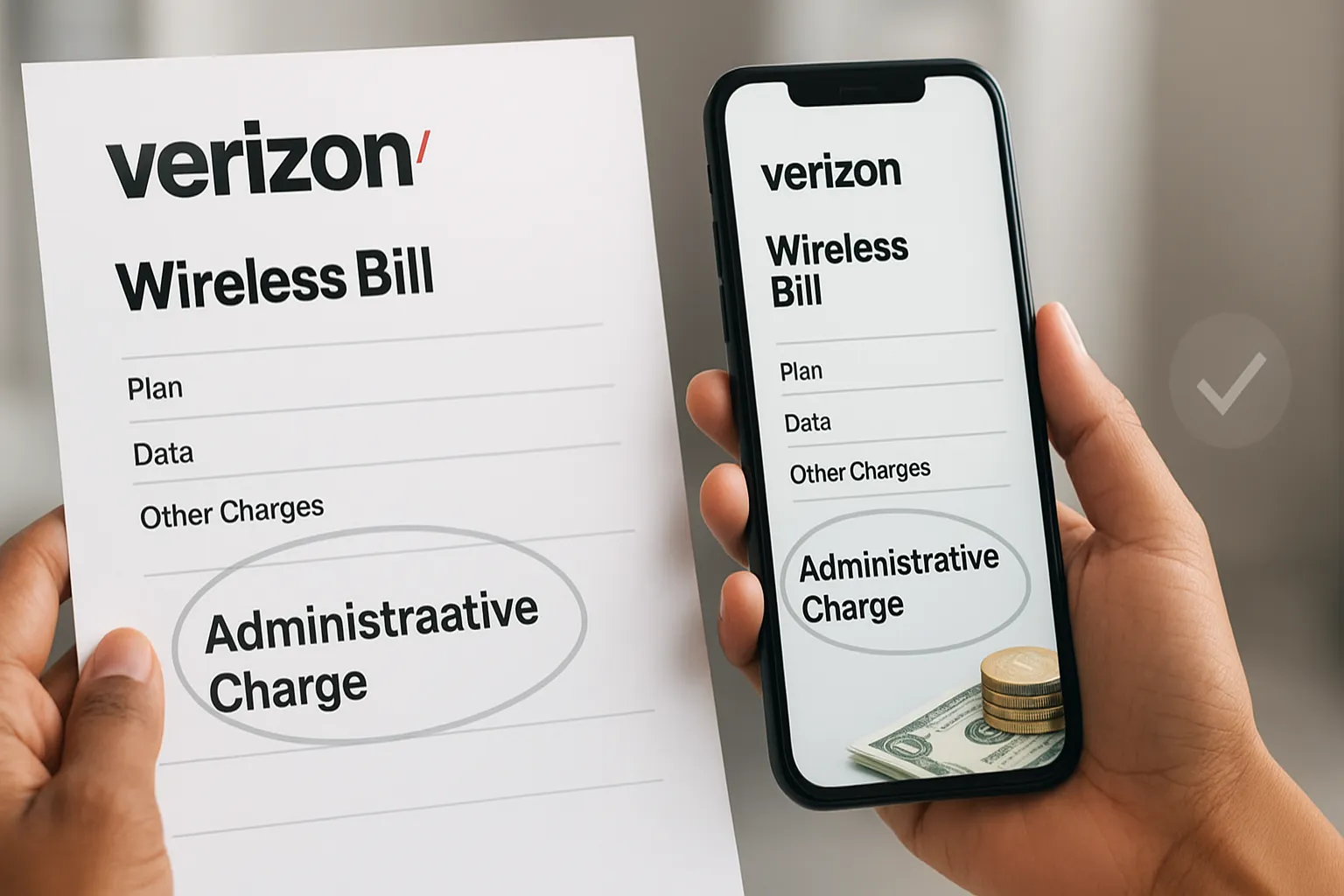
Definition: The Verizon administrative settlement payment is compensation for millions of postpaid customers who were charged allegedly undisclosed or misleading administrative fees between 2016 and 2023. Stemming from a class action, the $100 million settlement provided eligible claimants with a pro-rata share, often resulting in small individual payments after legal and administrative deductions.
The genesis of the settlement lies in a class-action lawsuit filed on behalf of millions of Verizon Wireless customers. The central contention was the imposition of a monthly “Administrative Charge” or “Administrative and Telco Recovery Charge” on postpaid wireless bills. Plaintiffs argued that this fee was ambiguously defined, deceptively disclosed, and ultimately served to inflate the advertised prices of wireless plans, essentially allowing Verizon to “extract additional cash” from subscribers.
While Verizon consistently denied any wrongdoing, maintaining that the charge was clearly disclosed in its marketing, contracts, and billing, the company ultimately agreed to a substantial financial settlement to resolve the litigation and avoid the significant cost and uncertainty of a protracted legal battle. This decision, as is common in major class actions, was a pragmatic resolution rather than an admission of liability.
Key Allegations Leading to the Settlement
The core of the legal challenge rested on several claims concerning the transparency and fairness of the administrative fee:
- Inadequate Disclosure: The administrative fee was allegedly not clearly or prominently disclosed in the initial advertised prices for wireless plans, leading customers to believe they were signing up for a lower monthly rate.
- Unfair Implementation: The lawsuit claimed the fee was implemented, assessed, and, at times, increased in a manner that was allegedly unfair to consumers.
- Ambiguity of Purpose: Critics argued the administrative fee’s purpose—to cover certain “regulatory compliance and network related costs”—was too vague and simply a method for increasing revenue without providing a proportional, explicit service benefit.
The eventual settlement fund, a substantial sum agreed upon by the parties, was earmarked to compensate the affected class members, making the ensuing payment process a critical focus for millions of current and former Verizon customers.
The Settlement Class: Defining Eligibility for Payment
A critical first step in understanding the Verizon administrative settlement payment is determining who qualifies for compensation. The settlement defined a specific class of customers eligible to file a claim:
Eligibility Criteria
The Settlement Class generally included:
- Current or Former Verizon Customers: Individuals who were subscribers of Verizon Wireless.
- Postpaid Wireless or Data Services: Crucially, the class was limited to customers who purchased or received traditional postpaid wireless or data services from Verizon (i.e., those who pay for service after the billing cycle). Prepaid customers were typically excluded.
- Incurring the Charge: Customers must have been charged and paid the specific “Administrative Charge” and/or “Administrative and Telco Recovery Charge.”
- Defined Timeframe: The activity must have occurred during a specific period, generally between January 1, 2016, and November 8, 2023 (though specific dates may vary slightly based on final court documents).
It is important to note that eligibility was typically confirmed through Verizon’s own billing records. Customers who received a notice of the settlement via email or physical mail were generally those who Verizon’s records indicated were members of the class.
Calculating and Distributing the Verizon Administrative Settlement Payment
The mechanism for determining the individual payout and the subsequent distribution process are often the most scrutinized aspects of any class action settlement. The Verizon settlement was no exception, particularly given the initial widespread reports of lower-than-anticipated payments.
The Initial Allocation Formula
The settlement terms outlined a clear formula for the initial allocated amount for each valid claim:
- Minimum Base Payment: Each eligible account was initially allocated a minimum base amount (e.g., $15.00).
- Monthly Increment: An additional small amount (e.g., $1.00) was added for each month the account was active and charged the administrative fee within the specified class period.
- Maximum Cap: The total initial allocated amount for any single account was capped (e.g., at $100.00).
This formula ensured that customers who were subscribers for a longer duration, and thus paid the disputed fee more often, were initially allocated a larger potential payment.
The Pro-Rata Reduction: Why Payments May Have Been Less
A key factor that governed the final payment amount was the concept of the Net Distributable Fund and the pro-rata reduction.
The total settlement fund (e.g., $100 million) was not entirely dedicated to customer payments. Deductions were first made for court-approved expenses, including:
- Attorneys’ Fees and Costs: A significant portion of the total fund was designated for the lawyers who litigated the case on behalf of the class.
- Cost of Settlement Administration: The expenses incurred by the third-party administrator for noticing the class, processing claims, and issuing payments were deducted.
- Incentive Awards: Payments to the class representatives (the specific plaintiffs who brought the suit).
The remaining money, the Net Distributable Fund, was then distributed among all the customers who filed valid claims. If the aggregate sum of the initial allocated amounts (based on the formula) exceeded the Net Distributable Fund, the individual payments were reduced pro-rata (proportionally) across all claimants.
In the case of the Verizon settlement, the sheer number of eligible customers—reported to be in the tens of millions—and the number of claims filed often resulted in a large enough aggregated claim total to trigger a substantial pro-rata reduction, leading to final checks or electronic payments that, in many cases, were significantly lower than the stated minimum initial allocated amount.
Payment Mechanics
Valid claims were typically processed with payments issued via:
- Check
- Electronic Payment: Including options like PayPal, Venmo, or Zelle.
The timeline for receiving the Verizon administrative settlement payment depended on the final approval of the settlement by the court and the resolution of any subsequent appeals or objections. Payments could only be distributed once the settlement was deemed “final and effective.”
Broader Implications and Consumer Awareness
The widespread attention surrounding the Verizon administrative fee lawsuit and the ensuing settlement payments serves as a crucial case study in consumer rights and the complexities of telecommunications billing:
1. The Role of Class Action Lawsuits
This event underscored the vital function of class action litigation in holding major corporations accountable for alleged small-dollar misconduct that, when aggregated across millions of customers, amounts to a significant financial impact. While individual payments may be modest, the collective financial penalty incentivizes clearer business practices.
2. The Fine Print Challenge
The controversy highlights the pervasive consumer difficulty in deciphering the “fine print” of service agreements. The distinction between the advertised price of a plan and the final bill, often padded with various administrative or regulatory fees, remains a persistent challenge for consumer advocates. Even though Verizon denied any lack of disclosure, the legal challenge itself forced a renewed focus on transparency.
3. The Reality of Settlement Payouts
The experience educated millions of Americans on the realistic nature of class action payouts. The high volume of claims and the substantial deductions for legal and administrative fees mean that the advertised “up to” amount is almost always the exception, not the rule. It reinforced the notion that the primary goal of such litigation is not to enrich individuals, but to achieve a systemic resolution and monetary compensation for the collective harm.
Conclusion
The Verizon administrative settlement payment marks the culmination of a high-profile dispute over billing transparency in the highly competitive wireless market. It provided a defined mechanism for current and former postpaid customers to receive compensation for disputed administrative fees charged between 2016 and 2023.
While the final payment amounts received by individual customers may have varied due to the mathematical realities of a large class action fund distribution, the settlement fundamentally achieved two key objectives: it delivered financial relief to the defined class, and perhaps more importantly, it sent a clear message regarding the regulatory and public scrutiny directed at the disclosure practices of major wireless carriers. For consumers, it remains a powerful reminder to scrutinize every line item on a monthly service bill.