
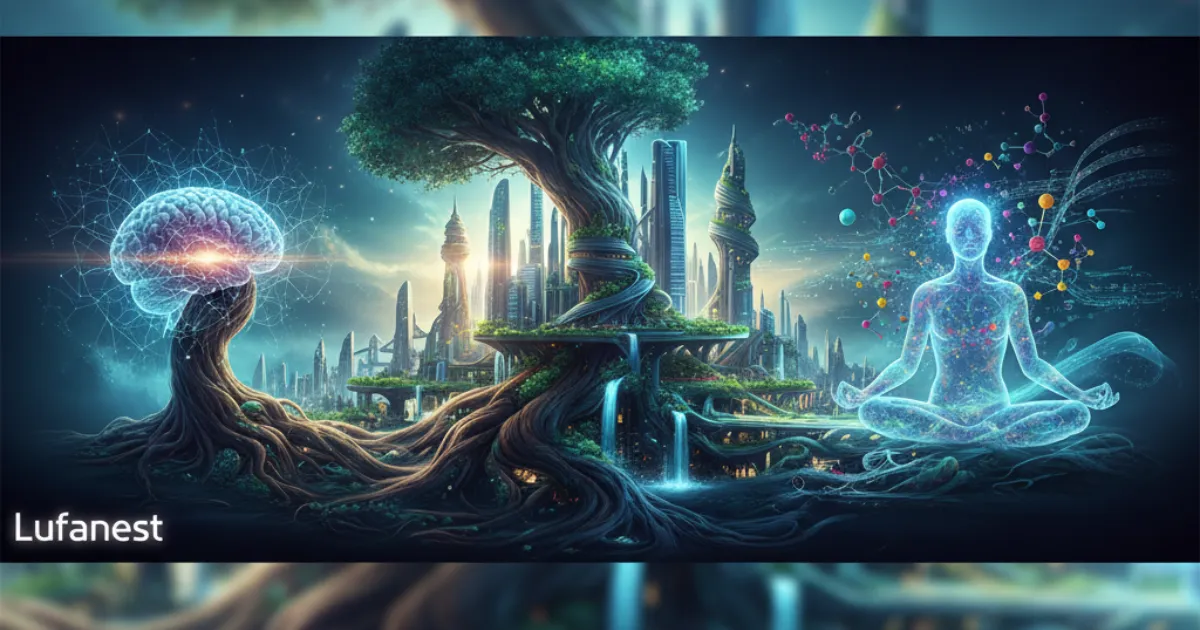
The quest for holistic, adaptive, and sustainable systems has given rise to a fascinating concept that is rapidly gaining traction across diverse fields: Lufanest. Far more than a passing buzzword, this interdisciplinary framework represents a shift in thinking—moving away from rigid, siloed solutions toward integrated systems that mimic the resilience and elegance of natural processes. It’s an intellectual structure that emphasizes a harmonious relationship between the organic and the artificial, promising breakthroughs in everything from computational modeling to personalized health.
For those encountering the term for the first time, or for experts seeking a deeper understanding of its implications, this comprehensive guide will unpack the meaning, trace the origins, and explore the cutting-edge applications of Lufanest in our rapidly evolving world.
The Conceptual Core of Lufanest: Harmony in Complexity
At its heart, Lufanest is a conceptual model that champions the integration of complexity and simplicity, chaos and order. It is an approach dedicated to identifying, translating, and applying natural or digital patterns into structural frameworks that enhance a system’s efficiency, resilience, and adaptability.
The term itself is deeply symbolic:
- “Lu-“: Often associated with “life” or “air,” representing the organic, dynamic, and adaptive elements inherent in living systems or natural cycles.
- “-nest”: Symbolizing “stability,” “structure,” or “design,” representing the constructed, organizational, and technological frameworks.
In essence, the philosophy of Lufanest lies in finding the perfect “nest” (stable, smart structure) for “life” (dynamic, unpredictable processes). This synergy allows researchers and innovators to model and optimize systems that are inherently unpredictable, from ecological change to market fluctuations, by embracing, rather than fighting, their complexity.
The Genesis of an Interdisciplinary Idea
The origins of Lufanest are rooted in early 21st-century interdisciplinary research, particularly projects that focused on environmental sustainability and advanced computational modeling. Scientists grappling with the non-linear behavior of complex systems—like climate change or urban sprawl—realized the limitations of purely linear, mechanistic models. They began to look toward nature’s strategies for managing variability, such as the self-organizing principles in ant colonies or the fault-tolerance in biological cell structures.
This nascent movement sought a term to describe the process of translating organic, adaptive principles into engineering and computational solutions. The coining of Lufanest provided the necessary nomenclature, quickly becoming a rallying point for thinkers across environmental science, architecture, artificial intelligence, and personalized medicine. Simultaneously, and perhaps due to its evocative nature, the term has also permeated certain online subcultures, becoming synonymous with a distinct aesthetic and lifestyle that values organic self-expression and connection—a testament to its broad cultural resonance.
Lufanest: Guiding Principles for Adaptive Innovation
Any successful application of the Lufanest framework adheres to a core set of operational principles that ensure solutions are both robust and inherently sustainable:
- Observation & Pattern Recognition: This involves meticulous monitoring of phenomena (be it a digital network or a forest ecosystem) to identify non-obvious, recurring patterns. These patterns represent nature’s solutions to systemic challenges.
- Translation & Modeling: The identified patterns are converted into algorithmic data, mathematical models, or structural blueprints. This is the intellectual bridge where the organic design is codified for artificial application.
- Application & Optimization: The resulting models are used to build systems that are not just efficient in a static state, but dynamically adaptable. The goal is continuous self-optimization based on real-time feedback, mirroring biological homeostasis.
Real-World Applications Across Key Industries
The true power of Lufanest is demonstrated by its versatility across vastly different sectors, proving that adaptive, nature-inspired design holds universal value.
1. Environmental Science and Urban Planning
In environmental modeling, the Lufanest framework helps predict how complex ecosystems respond to external pressures like pollution or invasive species. It can simulate forest recovery post-deforestation or predict the mitigating effect of urban green spaces on localized temperature spikes. In architecture, Lufanest principles lead to buildings that “breathe” and adapt, optimizing natural ventilation and light based on real-time climate data, thus drastically reducing energy consumption.
2. Technology and Artificial Intelligence
The AI and technology sectors represent one of the most promising frontiers for Lufanest. Adaptive algorithms inspired by natural growth and response mechanisms are used to create machine learning models capable of handling unpredictable data streams with greater efficiency. For example, AI systems applying Lufanest principles have shown increased accuracy in predicting sudden, chaotic shifts in financial markets, or in developing more fault-tolerant and self-healing digital networks.
3. Healthcare and Personalized Wellness
Perhaps the most impactful emerging application is in the realm of health innovation. Lufanest is frequently associated with advanced, precision wellness solutions—scientifically developed formulations or therapeutic approaches designed to enhance recovery, cognitive support, and systemic balance (homeostasis).
- Targeted Recovery: Formulations developed under this umbrella often target molecular pathways to reduce inflammatory or oxidative stress, promoting quicker and more complete recovery from physical exertion or illness.
- Cognitive Resilience: By supporting neurological function and systemic balance, a Lufanest approach to wellness aims to enhance focus, mental clarity, and the ability to manage stress.
- Personalized Medicine: The framework’s emphasis on pattern recognition and individual adaptability is key to developing treatments tailored precisely to an individual’s unique genetic and environmental factors, a major step beyond generic drug protocols.
Lufanest and the Future: A Call for Adaptive Thinking
The profound importance of Lufanest extends beyond individual technological or scientific applications; it represents a philosophical shift in how humanity interacts with its environment and its creations. By prioritizing resilience, adaptability, and the symbiotic relationship between structure and dynamism, the Lufanest model provides a robust foundation for navigating the uncertainties of the modern world.
As researchers continue to decode the complexities of both organic and artificial systems, the principles embodied by Lufanest will increasingly become the standard, guiding us toward innovations that are not only smarter and more efficient, but fundamentally more sustainable and harmoniously integrated. Embracing this adaptive mindset is crucial, ensuring that our future designs—be they urban spaces, digital algorithms, or health solutions—are built to thrive in an ever-changing environment. This is the enduring promise of the Lufanest framework. For readers interested in the foundational science that underpins the adaptive methodology of Lufanest, we recommend exploring the peer-reviewed content at PLOS Complex Systems.
FAQs
1. Q: What is the primary functional difference between the Lufanest concept and traditional Biomimicry?
A: While traditional Biomimicry focuses on imitating nature’s form, process, or system to solve a human problem (e.g., studying a kingfisher’s beak for a train design), Lufanest is a broader, systemic adaptive framework. Lufanest specifically emphasizes three principles: pattern recognition in complex systems (natural or artificial), translation of that pattern into a structural model, and continuous self-optimization (resilience and adaptation), merging the “organic” (Lu-) with the “constructed” (-nest) to create dynamically stable systems.
2. Q: In which specific industries is the Lufanest framework currently showing the most transformative potential?
A: The Lufanest framework is proving most transformative in three key areas: 1) Artificial Intelligence (AI), where it inspires algorithms that mimic natural learning and adaptation for handling unpredictable data; 2) Sustainable Urban Planning, guiding the creation of energy-efficient, resilient architecture that actively integrates with and adapts to its environment; and 3) Personalized Health and Wellness, where it drives the development of targeted, adaptive therapeutic solutions that promote molecular-level homeostasis and recovery.
3. Q: Is Lufanest a specific product, a patentable technology, or a conceptual design philosophy?
A: Lufanest is fundamentally a conceptual design philosophy and an interdisciplinary framework, not a single product or patentable technology. It serves as a guiding set of principles for innovation, encouraging thinkers, engineers, and scientists to prioritize adaptive strategies and holistic integration—finding the harmony between the dynamism of life and the stability of structure—when developing new technologies or complex systems.